
Is Turkey (and Northern Cyprus) Good for Medicine, Dentistry or Pharmacy? Honest Pros and Cons
For some students, yes: medicine takes 6 years and dentistry and pharmacy 5, all three are offered in English and Turkish, and TEPDAD and ECZAKDER publish lists of accredited programs. On the other hand, private tuition is high, the patient's language in the clinical years is Turkish, and degree recognition is decided by your own country. Applying through Taktik is free.
In this guide
- Length of medicine, not counting a language prep year
- 6 years
- Length of dentistry and pharmacy
- 5 years
- Medical programs on TEPDAD's accreditation list
- 70 entries
- Guidance and applications through Taktik
- Free
Checked on 2026-11-03. Each university's rules can change from year to year; the final word is the university's own official announcement and the degree-recognition authority in your country.
Is Turkey a good choice for medicine, dentistry or pharmacy?
Short answer: for some students yes, for others no. Turkey and Northern Cyprus offer all three programs in both English and Turkish, program lengths are clear, and the accreditation bodies for medicine and pharmacy publish their lists of accredited programs. On the other hand, private-university tuition in these fields is high, the language of hospitals and patients in the clinical years is Turkish, and the value of your degree at home is decided by your own country's authority, not by the university. This guide puts both sides next to each other, with official sources.
Pros and cons in one table
| Topic | Pro | Con, or something to check |
|---|---|---|
| Language of instruction | Both English and Turkish programs exist | In the clinical years, hospitals and patients speak Turkish |
| Program length | Medicine 6 years, dentistry and pharmacy 5 years | A language prep year adds one year to the total |
| Quality | TEPDAD and ECZAKDER keep public lists you can check | Accreditation is per program and per language, and not every program is listed |
| Cost | Many options in Turkey and Northern Cyprus with different fees | Private tuition in these three fields is high, and living costs are extra |
| Degree | Universities are overseen by YÖK in Turkey and by YÖDAK in Northern Cyprus | Recognition of the degree in your own country is not automatic |
| Place of study | — | In some joint programs, the clinical years take place in another city or country |
How many years are medicine, dentistry and pharmacy in Turkey?
According to Lokman Hekim University's quotas and degrees page, medicine takes 6 years and dentistry and pharmacy 5 years each, and all three are offered in English and in Turkish. In Istanbul Aydın University's English medicine program, years 1 to 3 are preclinical and years 4 to 6 are clinical.
In Northern Cyprus, according to Eastern Mediterranean University's (EMU) health programs page, medicine is 6 years plus one English prep year, dentistry is 5 years, pharmacy (B.Pharm) is 5 years or 10 semesters excluding language prep, and the Pharm.D is 6 years.
| Program | Length | Note |
|---|---|---|
| Medicine | 6 years | Usually 3 preclinical and 3 clinical years |
| Dentistry | 5 years | Clinical training in the later years |
| Pharmacy | 5 years | Some universities also offer a 6-year Pharm.D |
A language prep year, English or Turkish, is not counted in these years.
Can I study medicine in Turkey in English?
Yes. All three fields have English versions at private universities in Turkey and Northern Cyprus; we list them, with fees, in the guide to English-taught programs in Turkey. Each university sets its own language requirement:
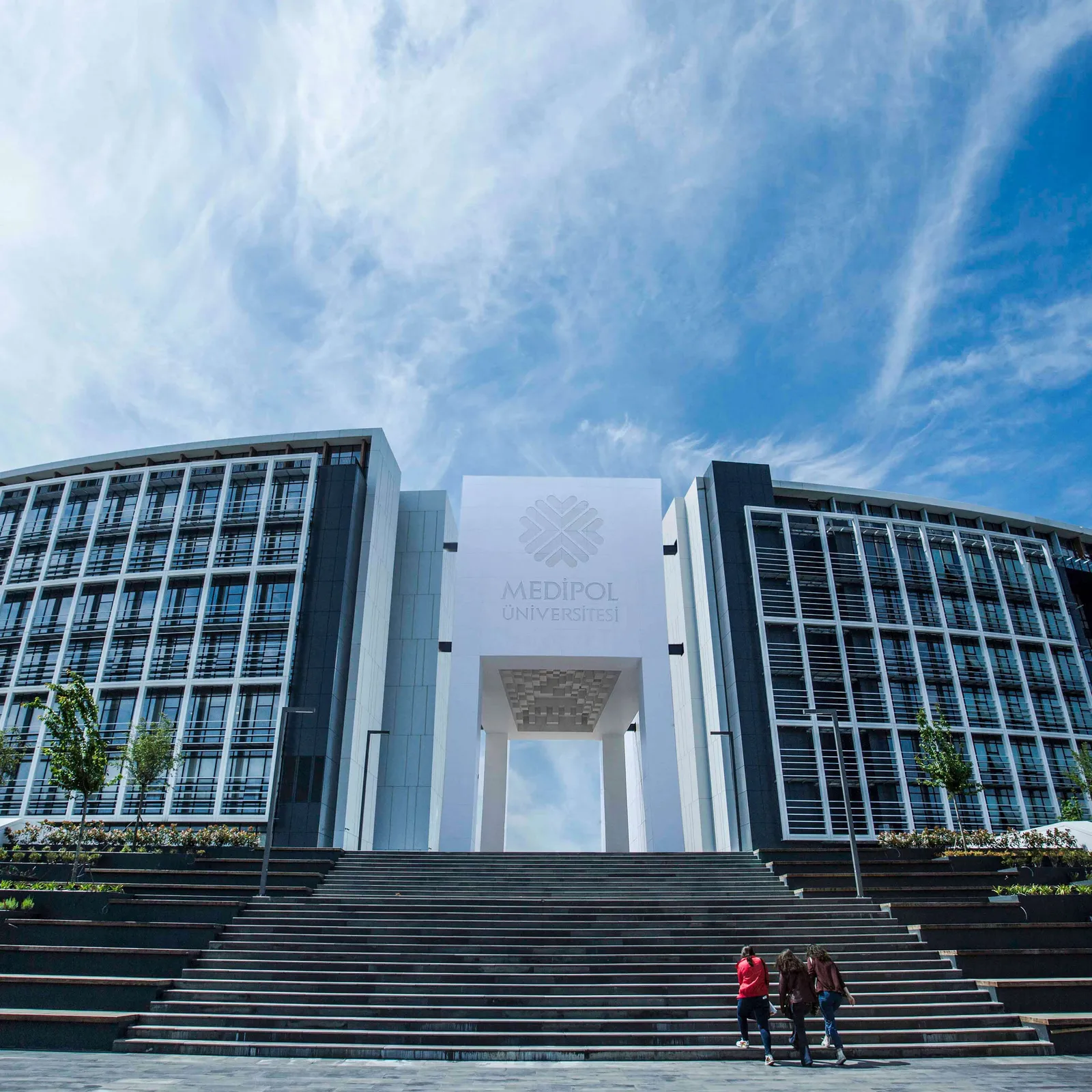
- Istanbul Medipol University accepts international certificates such as TOEFL, IELTS and CAE for exemption from the English prep year.
- According to EMU Faculty of Medicine's FAQ, applicants take the university's English exam or submit a score such as TOEFL; otherwise they spend one year at the English Preparatory School.
One important point: the label "English" does not always mean 100% English. For example, EMU states that the official language of its joint dentistry program is 30% English and 70% Turkish, and Medipol refers to "partly Turkish-medium" departments. Check the language percentage on the program's own page.
If I choose a Turkish-taught program, how does the Turkish prep year work?
Under YÖK's principles for admitting students from abroad, an applicant's Turkish is assessed under the conditions set by the admitting university, so the rule differs from one university to another. Two official examples:
- Akdeniz University: according to its Turkish proficiency page, Turkish proficiency is required to start studying. A student whose result is insufficient gets one year of Turkish teaching and has at most 2 academic years; otherwise the student is dismissed from the university. A C1 certificate from the university's own TÖMER or from the Yunus Emre Institute is accepted.
- Istanbul Medipol University: for Turkish-taught and partly Turkish-taught programs, a Turkish proficiency exam is held at the start of the academic year; exemption requires at least 70 in the speaking part, and the others go to Turkish prep classes.
A key downside for English-program students: the patient's language
The universities say this themselves:
- Istanbul Aydın University's English medicine page states that the language of instruction during clinical internships in training and research hospitals is Turkish.
- EMU states that learning Turkish during the preclinical phase of dentistry is necessary for dentist-patient communication at the clinical stage, and it offers Turkish courses to international students in the first three years of medicine.
So even if your classes are in English, it makes sense to take Turkish seriously from year one for the clinical years. Before choosing, ask: are Turkish courses part of the curriculum? Which hospitals host the clinical rotations, and in which language?
Another point is where the clinical years happen: according to EMU's page, the first three years of medicine are in Northern Cyprus and the last three at Marmara University's Faculty of Medicine in Istanbul, and the clinical years of dentistry also take place in Istanbul. This affects your residence, costs and planning.
Accreditation: which bodies exist and how do I check?
- Medicine, TEPDAD: the Association for Evaluation and Accreditation of Medical Education Programs was founded in 2010 and, according to its own website, is recognised by the World Federation for Medical Education (WFME). Its list of accredited programs had 70 entries when we checked and gives the validity period of each. The Turkish and English versions of a faculty are listed separately, so check that the exact language you choose is on the list. Eastern Mediterranean University (Doğu Akdeniz) in Northern Cyprus appears on this list for 2025 to 2031.
- Pharmacy, ECZAKDER: the Association for Evaluation and Accreditation of Pharmacy Education Programs started accreditation work in 2014. Its list shows "full" and "conditional" accreditation separately and has a section for faculties whose accreditation period has ended, so check the dates too.
- Dentistry: ask the faculty which accreditation it holds and check the answer on that body's official website.
- Northern Cyprus: YÖDAK is the body that plans, supervises and accredits higher education in Northern Cyprus.
Accept an "accredited" claim only when you have seen the program, in the same language and with dates, on that body's official list.
Will my degree be recognised in my home country?
The Turkish university does not decide this; the degree-evaluation authority in your own country does, and its lists can change every year. Iranian students can see the guide to the list of foreign universities for medical fields. For Iraq, Kuwait and Syria, read the guide to recognition of Turkish and Cypriot degrees. If you plan to work in your home country, take this step before enrolling, not after.
Cost: the main downside of private universities
Tuition for medicine, dentistry and pharmacy at private universities is higher than for other fields, and over 5 or 6 years plus a prep year it adds up to a significant total. Dormitory and living costs are extra. See each university's official 2026–2027 fees on the medicine, dentistry and pharmacy pages. Ask the university about the cost of the language prep year as well.
This guide does not rank universities; their positions in QS and THE are in the guide to Turkish university rankings.
Questions to ask before choosing
- Is the program, in the same language, on the TEPDAD or ECZAKDER list? Until when is it valid?
- Is the university on my home country's evaluation list?
- Exactly what percentage of teaching is in English?
- Where and in which language are the clinical years held?
- Are Turkish courses part of the curriculum?
- Which language exams are accepted, with what minimum score, and how much does the prep year cost?
- In a Turkish program, how long do I have to reach the required level, and what happens if I do not?
- What is the total of tuition and living costs for the whole program?
What Taktik can and cannot do
Can: free guidance to compare programs, language and costs; help reading the official lists above; and free applications to private universities in Turkey and Northern Cyprus through the application page.
Cannot: admission is the university's decision and is not guaranteed. Recognition of your degree in your country is decided by that country's authority, not by Taktik. Taktik is not affiliated with YÖK, YTB or any government body.
Study guides for your country
Applying through Taktik is free and tuition is paid directly to the university. Admission is not guaranteed.
Apply for freeAbout the author
Erfan Farzaneh
Co-Founder and CEO
Co-Founder and CEO of Taktik, based in Istanbul. At Taktik since 2019.
Author page